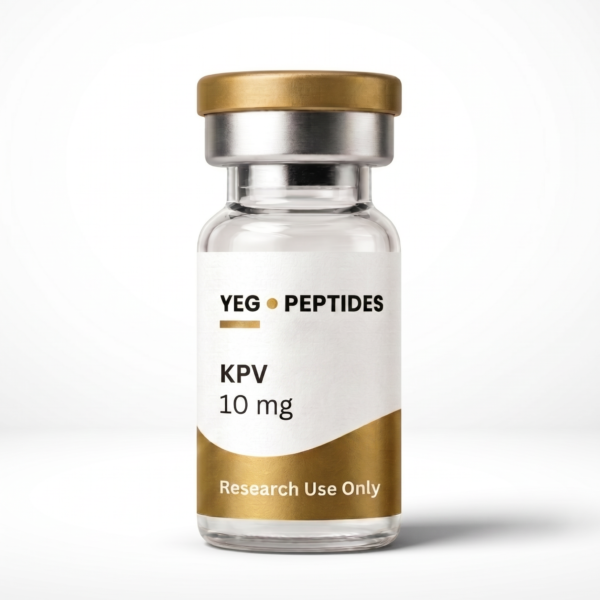
KPV is a naturally occurring tripeptide composed of the amino acids Lysine-Proline-Valine (Lys-Pro-Val). Derived from the C-terminal sequence of alpha-melanocyte-stimulating hormone (α-MSH), it is a potent, targeted anti-inflammatory agent studied for its ability to soothe gut inflammation, promote wound healing, and reduce skin irritation without hormonal side effects.
What Studies Show (Layman Summary):
Despite being derived from α-MSH, KPV lacks pigment-stimulating properties and instead retains concentrated anti-inflammatory and antimicrobial activity. Research models specifically focus on its potential for:
Targeted Gut Health & IBD Support: Inhibits pro-inflammatory signaling pathways in intestinal epithelial cells, offering potential relief for inflammatory bowel conditions (IBD/IBS).
Potent Anti-Inflammatory Action: Directly suppresses NF-κB and key inflammatory cytokines (such as TNF-α and IL-6) at the cellular level.
Antimicrobial & Antifungal Activity: Exhibits direct antimicrobial efficacy against pathogens like Candida albicans and Staphylococcus aureus.
Skin Barrier & Wound Repair: Accelerates re-epithelialization, reduces redness, and promotes skin tissue healing in dermatological research.
How It Works (Research Mechanism)
KPV acts primarily as a cellular signaling modulator to quiet systemic and localized inflammatory cascades:
Nuclear Translocation Inhibition: Enters target cells and directly blocks the nuclear translocation of NF-κB, a master gene transcription regulator responsible for driving chronic inflammation.
Cytokine Cascade Downregulation: Suppresses the production and release of pro-inflammatory cytokines including IL-1, IL-6, and TNF-α.
Cellular Uptake via PepT1: Transports directly into intestinal epithelial immune cells via the oligopeptide transporter PepT1, making it highly effective for targeted gastrointestinal research.
Pathogen Disruption: Interacts with fungal and bacterial cell walls to disrupt membrane integrity and prevent biofilm formation.
Research Dosing & Usage Parameters
In preclinical research models, KPV administration schedules and doses vary depending on the localized or systemic target area:
Common research parameters evaluate:
Systemic / Parenteral Protocols: Typically studied at 200 mcg to 500 mcg per day administered once daily.
Gastrointestinal / Oral Protocols: Evaluated at 500 mcg to 1,000 mcg (1 mg) daily for targeted gut lumen delivery.
Topical Protocols: Formulated into creams or sprays at 0.01%–0.1% concentrations for dermatological wound and inflammation studies.
Reconstitution & Concentration Calculation
Adding 2.0 mL of bacteriostatic water or sterile laboratory diluent to this 10 mg vial creates a clean, easy-to-measure stock solution of 5.0 mg/mL (500 mcg per 0.1 mL).
Volumetric Ratio Breakdown (with 2.0 mL reconstituted):
0.02 mL (2 units on an insulin syringe) = 100 mcg of active KPV.
0.04 mL (4 units) = 200 mcg of active KPV.
0.10 mL (10 units) = 500 mcg (0.5 mg) of active KPV.
0.20 mL (20 units) = 1,000 mcg (1.0 mg) of active KPV.
Storage & Handling Specifications
Store unopened lyophilized vials in a cool, dark environment shielded from direct light exposure. Following reconstitution with bacteriostatic water, maintain stock solutions refrigerated between 2°C – 8°C (36°F – 46°F). Reconstituted stock solutions should be used within 30 days to ensure optimal peptide integrity and biological activity.