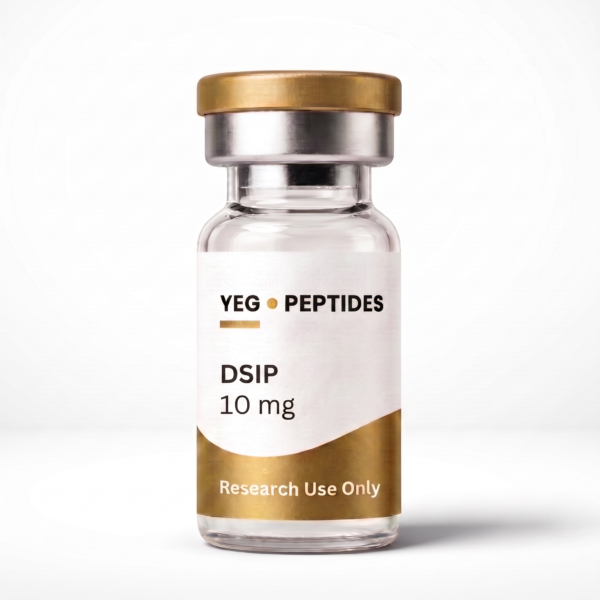
DSIP (Delta Sleep-Inducing Peptide) is a naturally occurring 9-amino-acid neuropeptide originally isolated from cerebral venous blood during slow-wave sleep. Supplied in a high-yield 10 mg vial, it is widely researched for its ability to regulate sleep architecture, modulate stress responses, normalize endocrine hormone release, and offer central neuroprotective benefits.
What Studies Show (Layman Summary):
Unlike conventional sedatives, DSIP does not act as a direct central nervous system depressant; instead, it acts as a neuromodulator that restores natural biological rhythms. Preclinical and clinical research highlight its potential for:
Delta-Wave Sleep Promotion: Enhances deep, slow-wave (delta) sleep and optimizes overall sleep efficiency without causing morning grogginess or dependence.
Stress Response & Cortisol Modulation: Helps normalize ACTH (adrenocorticotropic hormone) and systemic cortisol levels under chronic psychological or physical stress.
Analgesic & Pain Relief Properties: Demonstrates pain-mitigating effects in chronic pain, migraine, and opioid withdrawal research models.
Hormonal Rhythm Optimization: Supports baseline LH (luteinizing hormone) and growth hormone secretion by re-establishing healthy circadian signaling.
How It Works (Research Mechanism)
DSIP exerts regulatory control across multiple neuroendocrine and central pathways:
Hypothalamic-Pituitary-Adrenal (HPA) Axis Regulation: Inhibits basal and stress-induced ACTH hypersecretion, reducing circulating glucocorticoids (cortisol) to mitigate stress-related damage.
Central Monoamine System Modulation: Modulates serotonergic, dopaminergic, and GABAergic neurotransmission in central sleep centers to facilitate natural transition into delta sleep states.
Free-Radical Scavenging & Neuroprotection: Reduces oxidative stress markers and lipid peroxidation in neuronal tissue during sleep-deprived conditions.
Opioid & NMDA Receptor Cross-Talk: Interacts with central pain pathways to reduce nociceptive transmission and physiological strain during physical stressors.
Research Dosing & Usage Parameters
In research models, DSIP parameters vary depending on whether the primary outcome measure is acute sleep induction, pain modulation, or HPA-axis normalization.
Common research parameters evaluate:
Standard Daily Test Dose: Typically evaluated at 100 mcg to 250 mcg per administration, administered 30 to 60 minutes prior to intended sleep windows.
Extended Protocol Range: Up to 500 mcg daily in specialized stress-adaptation or pain-mitigation protocols over 2 to 4 week cycles.
Reconstitution & Concentration Calculation
Adding 2.0 mL of bacteriostatic water or sterile laboratory diluent creates a stock solution concentration of 5.0 mg/mL (500 mcg per 0.1 mL).
Volumetric Ratio Breakdown (with 2.0 mL reconstituted):
0.02 mL (2 units on an insulin syringe) = 100 mcg of active DSIP.
0.04 mL (4 units) = 200 mcg of active DSIP.
0.05 mL (5 units) = 250 mcg (0.25 mg) of active DSIP.
0.10 mL (10 units) = 500 mcg (0.50 mg) of active DSIP.
Storage & Handling Specifications
Store unopened lyophilized vials in a cool, dark environment shielded from direct light exposure. Following reconstitution with bacteriostatic water, maintain stock solutions refrigerated between 2°C – 8°C (36°F – 46°F). Reconstituted stock solutions should be used within 30 days to ensure optimal peptide stability and biological activity.